Guan Yin Album
About the Album
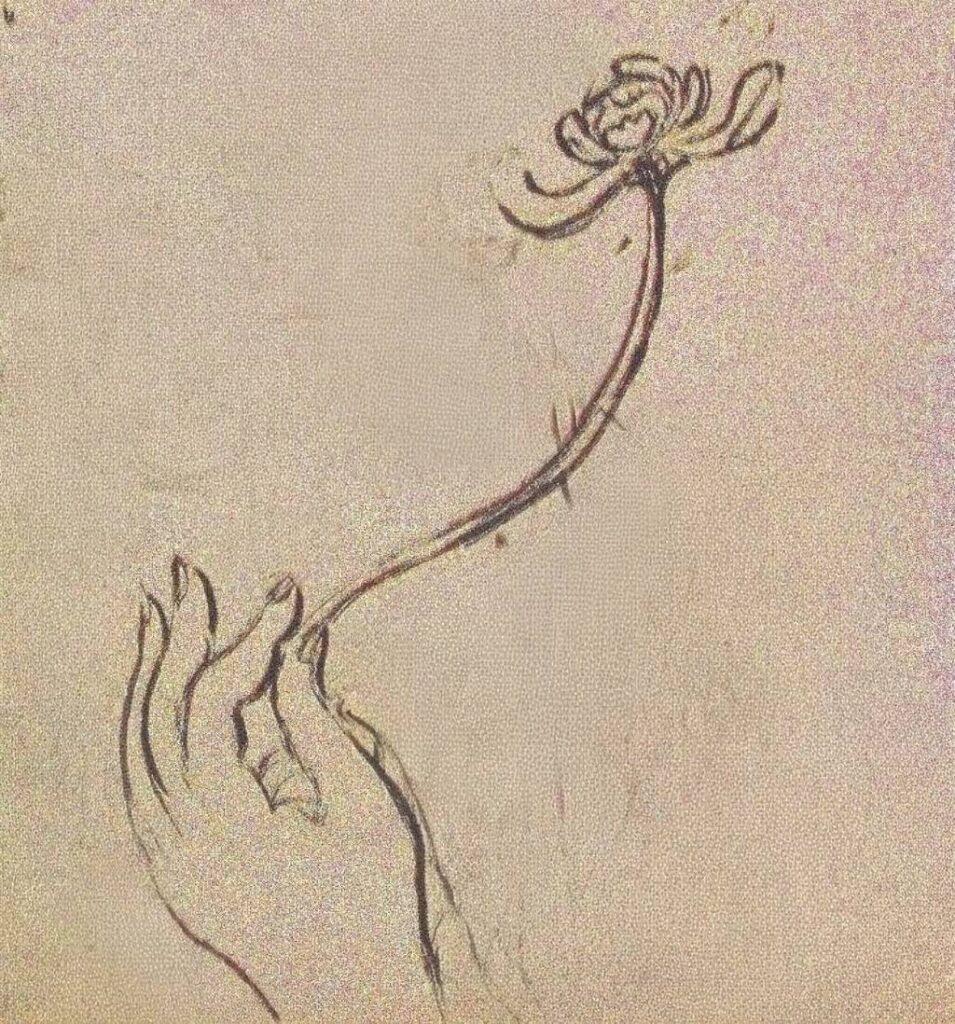
Guan Shi Yin — “the one who contemplates the sounds of the world” — is the most beloved figure in Mahayana Buddhism. She hears the cries of joy and the cries of suffering alike, and extends a hand to anyone who calls her name.
This collection gathers Rev. Heng Sure’s Guan Yin songs, recorded at the 2023 Pandora sessions: praises, mantras, ballads and sing-alongs set to Western melodies and played on six- and twelve-string guitars, banjo and octave mandolin. Several tunes appear more than once in different arrangements — slide guitar, fingerpicked, banjo, solo voice — so you can find the setting that suits your own voice. Please make these tunes your own.
Notes and Lyrics of the Songs
Music & Lyrics: Rev. Heng Sure
The Medicine Master Buddha — Bhaisajyaguru in Sanskrit, 藥師佛 Yao Shi Fo in Chinese — carries three names: the Medicine Master Thus Come One, the Buddha Who Dispels Calamities and Lengthens Life, and the Buddha of Lapis Lazuli Light. The way you reach this Buddha’s healing presence is through his name, and here the names are set to a banjo tune so they are easy to carry with you.
Medicine Master Thus Come One
Namo, Namo
He dispels calamities and lengthens life
Namo, Namo
He dispels calamities and lengthens life
Namo, Namo
Medicine Master Thus Come One
Namo, Namo
Namo Buddha of Lapis Lazuli Light
Namo, Namo
Namo Buddha of Lapis Lazuli Light
Namo, Namo
Medicine Master Thus Come One
Namo, Namo
Lyrics: The Mahamangala Sutta, translated and adapted by Rev. Heng Sure
The Mahamangala Sutta is the Buddha’s answer to a deva who asked what the highest blessing in life really is. The Buddha’s reply is a plain, practical list — good company, useful skills, care for one’s parents, a mind untroubled by the world’s eight winds. It is one of the best-loved discourses in the Pali canon, and it sits comfortably in a folk setting.
Music & Lyrics: Jennifer Berezan
Guan Yin is the Awakened Being who hears the sounds of the world, sounds of joy and sounds of suffering alike. She extends a hand to anybody in need, as long as you call on her name. This song was written by Jennifer Berezan, a Canadian-American musician who lives in Berkeley, California. Wherever I am in the Buddhist world, from China to Taiwan, from Singapore to San Francisco, people hear in this song the compassionate spirit of Guan Yin Bodhisattva.
She carries me, she carries me,
She carries me to the other side.
She carries me, she carries me,
She carries me to the other side.
She is a boat, she is a light,
High on a hill, in the dark of night,
She is a wave, she is the deep,
She is the dark where the angels sleep
When all is still and peace abides,
She carries me to the other side,
She carries me…
And though I walk through valleys deep,
And shadows chase me in my sleep,
On rocky cliffs I stand alone
I have no name, I have no home,
With broken wings I long to fly
She carries me to the other side,
She carries me…
A thousand arms, a thousand eyes,
A thousand ears to hear my cries,
She is the gate, she is the door
She leads me through and back once more,
When day has dawned and death is nigh
She carries me to the other side
She carries me…
She is the first, she is the last,
She is the future and the past,
Mother of all, of earth and sky,
She carries me to the other side,
She carries me…
Music & Lyrics: Rev. Heng Sure, 1978
Written in 1978, this is the long-form telling: Guan Yin’s vow, her home at the City of Ten Thousand Buddhas, the Great Compassion Mantra, and the thirty-two transformation bodies she takes on so that every kind of being can hear the teaching in a form it understands. This version is played on slide guitar; a fingerpicked setting of the same song appears as track 12.
Namo Guanshiyin Pusa, Namo Guanshiyin
Namo Guanshiyin Pusa, Namo Guanshiyin
Homage to the Bodhisattva Guanshiyin,
Who’s made a vow to save us from the troubles that we’re in,
Although she travels far and wide to save all as she roams,
10,000 Buddhas’ City is the Bodhisattva’s home;
Homage to the Bodhisattva Guanshiyin
Bringing joy and ending sorrow, say her name again,
Homage to the Great Dharani, holy magic spell,
Healing sickness, stopping evil, lucky, as you will.
Namo Guanshiyin Pusa, Namo Guanshiyin
Namo Guanshiyin Pusa, Namo Guanshiyin
Namo Bodhisattva Who Observes the Worlds’ Sounds
Everywhere your name is heard, happiness abounds
Contemplating freedom, compassionate and kind
Saving all from suffering and bringing peace of mind,
Namo Guanshiyin Pusa, Namo Guanshiyin
Namo Guanshiyin Pusa, Namo Guanshiyin
Namo Great Compassion Mantra, holy magic spell
Power inconceivable for those who hold it well,
Miracles more wonderful than words can ever tell,
Chant the mantra’s ancient sounds, and troubles you dispel.
Namo Guanshiyin Pusa, Namo Guanshiyin
Namo Guanshiyin Pusa, Namo Guanshiyin
Known by many different names in many different lands,
Bodhisattva Guanshiyin, with a thousand hands,
A thousand eyes, a thousand ears respond to those in need,
Recite the name of Guanshiyin, from troubles you’ll be freed;
Namo Guanshiyin Pusa, Namo Guanshiyin
Namo Guanshiyin Pusa, Namo Guanshiyin
In transformations thirty-two she reveals her light
Manifesting different bodies when the time is right
Now appearing as a beggar solving someone’s plight,
Now appearing as a king with awesome royal might,
Now a monk, now a maiden, now a nobleman,
Teaching in a way each different being can understand;
Compassionately bringing joy and ending suffering,
That’s the greatness of the Bodhisattva Guanshiyin,
Namo Guanshiyin Pusa, Namo Guanshiyin
Namo Guanshiyin Pusa, Namo Guanshiyin
Traditional praise, translated and adapted by Rev. Heng Sure
Master Hsuan Hua challenged his Western disciples to rewrite the daily ceremonies, chants and praises so they would sit naturally in the musical ear of the contemporary West. This is the Guan Yin Praise from the daily liturgy, carried over into English and into a folk melody.
Bodhisattva Guan Shi Yin is
wonderful past gratitude,
Pure and clear are her adornments
Gained through practice ages long
Sea-vast a red lotus flower fragrant,
rests beneath her foot,
Bay-curve of an Autumn moon is
in the crescent of her brows.
Everywhere and constantly,
sweet dew sprinkles from her vase
In her hand a willow branch,
through the countless autumns,
Prayers depart a thousand hearts,
In a thousand hearts she answers,
Sailing the sea of suffering,
Crossing people over;
Namo Greatly Kind and Compassionate
Bodhisattva of the Crystal Land
Who dwells on Potala Mountain and
observes the sounds of the world, (3x)
Music & Lyrics: Brian Conroy
Also known as “I Wanna Be a Bodhisattva.” Brian Conroy’s song takes the ordinary question every child gets asked — what do you want to be when you grow up? — and gives it the only answer a Mahayana Buddhist could want. The Bodhisattva turns down the one-way ticket to Nirvana and stays in the world as long as there are beings left to help.
When I was young, my momma said to me,
Son, when you grow up what do you wanna be?
She said choose carefully, and remember what I taught ya,
I said when I grow up, I wanna be a Bodhisattva.
When I grow up, I wanna be a Bodhisattva.
When I grow up, I wanna be a Bodhisattva.
While living beings can evolve,
I’m going to make the Bodhi Resolve.
When I grow up, I wanna be a Bodhisattva.
Some folks want a one-way ticket to Nirvana,
To live in joy and peace but I don’t wanna,
There’s only one job that was meant for me
That’s to follow the path of Bodhi,
When I grow up, I wanna be a Bodhisattva.
When I grow up, I wanna be a Bodhisattva.
When I grow up, I wanna be a Bodhisattva.
I wanna rescue living beings,
Just to share the joy that it brings.
So when I grow up, I wanna be a Bodhisattva.
When you grow up you can be a Bodhisattva
When you grow up, you can be a Bodhisattva.
If you want to make something of yourself
All you gotta do is just cultivate no self;
When you grow up you can be a Bodhisattva
When I grow up, I wanna be a Bodhisattva,
When I grow up, I wanna be a Bodhisattva,
While living beings can evolve,
I’m going to make the Bodhi Resolve.
When I grow up, I wanna be a Bodhisattva.
Words & Music: Janis Ian
Janis Ian wrote this in the middle of the pandemic and released it to anyone who wanted to record it. It is a simple, stubborn piece of hope — the winds of war stop blowing, loved ones come near again, the world learns to live as one.
Better times, better times will come.
Better times, better times will come.
When this world learns to live as one,
Oh, better times will come
When we greet each dawn without fear
Knowing loved ones soon will be near
When the winds of war cannot blow any more
Oh, better times will come
Better times, better times will come.
Better times, better times will come.
When this world learns to live as one,
Oh, better times will come
Though we live each day as our last,
We know someday soon it will pass,
We will dance, we will sing in that never-ending spring,
Oh, better times will come.
Better times, better times will come.
Better times, better times will come.
When this world learns to live as one,
Oh, better times will come
Music & Lyrics: Rev. Heng Sure
This is a song for the bad days. It doesn’t pretend to be composed — it admits that the happy heart got lost somewhere, that the habits run deep, that sleep won’t come. Guan Yin could have escaped this world that hurts so much, and instead she turned around and went back in. The verses are addressed to her the way you’d talk to someone who has never once refused to listen. A solo-voice version appears as track 13.
Guan Shi Yin, won’t you hear me
Guan Shi Yin, won’t you hear me
Guan Shi Yin, won’t you hear me
Guan Shi Yin.
Compassionate One you could escape
From the world that’s hurting so,
But you hear the cries of suffering
And you refuse to go
Guan Shi Yin, won’t you hear me
Guan Shi Yin, won’t you hear me
Guan Shi Yin, won’t you hear me
Guan Shi Yin.
You lead us to Nirvana,
From the sea of suffering,
You pull us out of birth and death,
You turn around and go back in.
Guan Shi Yin, won’t you hear me
Guan Shi Yin, won’t you hear me
Guan Shi Yin, won’t you hear me
Guan Shi Yin.
I used to watch the sunrise
I used to love the rain
My happy heart got lost somewhere
Won’t you help me find it again.
Guan Shi Yin, won’t you hear me
Guan Shi Yin, won’t you hear me
Guan Shi Yin, won’t you hear me
Guan Shi Yin.
Think I’m going crazy
The devil’s on my back
I need a hand to help me
My heart is gonna break
Guan Shi Yin, won’t you hear me
Guan Shi Yin, won’t you hear me
Guan Shi Yin, won’t you hear me
Guan Shi Yin.
I’m not an evil person,
But my habits they run deep
Tomorrow I’ll be changin’
Won’t you let me get some sleep.
Guan Shi Yin, won’t you hear me
Guan Shi Yin, won’t you hear me
Guan Shi Yin, won’t you hear me
Guan Shi Yin.
Music & Lyrics: Rev. Heng Sure, 1978
The same 1978 song as track 5, here fingerpicked rather than played with a slide. The gentler attack lets the story of the thirty-two transformation bodies come forward — beggar, king, monk, maiden, nobleman — each one a way of meeting a being where it already stands.
Namo Guanshiyin Pusa, Namo Guanshiyin
Namo Guanshiyin Pusa, Namo Guanshiyin
Homage to the Bodhisattva Guanshiyin,
Who’s made a vow to save us from the troubles that we’re in,
Although she travels far and wide to save all as she roams,
10,000 Buddhas’ City is the Bodhisattva’s home;
Homage to the Bodhisattva Guanshiyin
Bringing joy and ending sorrow, say her name again,
Homage to the Great Dharani, holy magic spell,
Healing sickness, stopping evil, lucky, as you will.
Namo Guanshiyin Pusa, Namo Guanshiyin
Namo Guanshiyin Pusa, Namo Guanshiyin
Namo Bodhisattva Who Observes the Worlds’ Sounds
Everywhere your name is heard, happiness abounds
Contemplating freedom, compassionate and kind
Saving all from suffering and bringing peace of mind,
Namo Guanshiyin Pusa, Namo Guanshiyin
Namo Guanshiyin Pusa, Namo Guanshiyin
Namo Great Compassion Mantra, holy magic spell
Power inconceivable for those who hold it well,
Miracles more wonderful than words can ever tell,
Chant the mantra’s ancient sounds, and troubles you dispel.
Namo Guanshiyin Pusa, Namo Guanshiyin
Namo Guanshiyin Pusa, Namo Guanshiyin
Known by many different names in many different lands,
Bodhisattva Guanshiyin, with a thousand hands,
A thousand eyes, a thousand ears respond to those in need,
Recite the name of Guanshiyin, from troubles you’ll be freed;
Namo Guanshiyin Pusa, Namo Guanshiyin
Namo Guanshiyin Pusa, Namo Guanshiyin
In transformations thirty-two she reveals her light
Manifesting different bodies when the time is right
Now appearing as a beggar solving someone’s plight,
Now appearing as a king with awesome royal might,
Now a monk, now a maiden, now a nobleman,
Teaching in a way each different being can understand;
Compassionately bringing joy and ending suffering,
That’s the greatness of the Bodhisattva Guanshiyin,
Namo Guanshiyin Pusa, Namo Guanshiyin
Namo Guanshiyin Pusa, Namo Guanshiyin
Music & Lyrics: Rev. Heng Sure
The same song as track 11, stripped down to a single unaccompanied voice. Without the instruments it becomes what it always was underneath — someone calling a name and waiting to be heard.
Guan Shi Yin, won’t you hear me
Guan Shi Yin, won’t you hear me
Guan Shi Yin, won’t you hear me
Guan Shi Yin.
Compassionate One you could escape
From the world that’s hurting so,
But you hear the cries of suffering
And you refuse to go
Guan Shi Yin, won’t you hear me
Guan Shi Yin, won’t you hear me
Guan Shi Yin, won’t you hear me
Guan Shi Yin.
You lead us to Nirvana,
From the sea of suffering,
You pull us out of birth and death,
Turn around and go back in.
Guan Shi Yin, won’t you hear me
Guan Shi Yin, won’t you hear me
Guan Shi Yin, won’t you hear me
Guan Shi Yin.
I used to watch the sunrise
I used to love the rain
My happy heart got lost somewhere
Won’t you help me find it again.
Guan Shi Yin, won’t you hear me
Guan Shi Yin, won’t you hear me
Guan Shi Yin, won’t you hear me
Guan Shi Yin.
Think I’m going crazy,
The devil’s on my back,
I need a hand to help me,
My heart is gonna break
Guan Shi Yin, won’t you hear me
Guan Shi Yin, won’t you hear me
Guan Shi Yin, won’t you hear me
Guan Shi Yin.
I’m not an evil person,
But my habits they run deep
With your help I’ll be changin’
Won’t you let me get some sleep.
Guan Shi Yin, won’t you hear me
Guan Shi Yin, won’t you hear me
Guan Shi Yin, won’t you hear me
Guan Shi Yin.
Music: Traditional, “The Cutty Wren”
Lyrics: Rev. Heng Sure
The Universal Door Chapter of the Lotus Sutra lists the dangers Guan Yin delivers us from — flood, fire, bandits, wild animals, arrest, demons — and promises that reciting her name truly will carry us through each one. Here that list is set to “The Cutty Wren,” an old English call-and-response ballad, so that Guan Yin and all living beings trade verses back and forth. The last two verses turn the whole thing inside out: what does it mean to recite her name truly? With no wish to succeed, no fear of failure, no self and no others.
Oh tell me your troubles, said Guan Yin Bodhisattva,
The water will drown me, said all living beings,
Recite my name truly, said Guan Yin Bodhisattva
The waters will dry up and you will not drown.
Oh tell me your troubles, said Guan Yin Bodhisattva,
The fires will burn me, said all living beings,
Recite my name truly, said Guan Yin Bodhisattva
The fires will go out and you will not burn.
Oh tell me your troubles, said Guan Yin Bodhisattva
Bandits surround me, said all living beings,
Recite my name truly, said Guan Yin Bodhisattva
Their weapons will shatter; you’ll meet with no harm.
Oh tell me your troubles, said Guan Yin Bodhisattva
The animals will eat me, said all living beings,
Recite my name truly, said Guan Yin Bodhisattva
The animals will run away and you will survive.
Oh tell me your troubles, said Guan Yin Bodhisattva
The police will arrest me, said all living beings,
Recite my name truly, said Guan Yin Bodhisattva,
The law will release you and you will go free.
Oh tell me your troubles, said Guan Yin Bodhisattva
Demons pursue me, said all living beings,
Recite my name truly, said Guan Yin Bodhisattva
Their eyes will not see you and you will get away.
Oh tell me your troubles, said Guan Yin Bodhisattva
I have no troubles and worries today,
Invoke my name truly for those sunk in suffering
Cultivate virtue and give it away.
What does it mean to recite your name truly?
It means to recite with no wish to succeed,
No fear of failure, no self, and no others,
With a heart of compassion for all living beings.
Music: Traditional, “The Cutty Wren”
Lyrics: Rev. Heng Sure
A second arrangement of the Universal Door call-and-response, without the banjo of track 14. Sing it with a group and let one side take Guan Yin’s lines and the other side take the troubles.
Oh tell me your troubles, said Guan Yin Bodhisattva,
The water will drown me, said all living beings,
Recite my name truly, said Guan Yin Bodhisattva
The waters will dry up and you will not drown.
Oh tell me your troubles, said Guan Yin Bodhisattva,
The fires will burn me, said all living beings,
Recite my name truly, said Guan Yin Bodhisattva
The fires will go out and you will not burn.
Oh tell me your troubles, said Guan Yin Bodhisattva
Bandits surround me, said all living beings,
Recite my name truly, said Guan Yin Bodhisattva
Their weapons will shatter; you’ll meet with no harm.
Oh tell me your troubles, said Guan Yin Bodhisattva
The animals will eat me, said all living beings,
Recite my name truly, said Guan Yin Bodhisattva
The animals will run away and you will survive.
Oh tell me your troubles, said Guan Yin Bodhisattva
The police will arrest me, said all living beings,
Recite my name truly, said Guan Yin Bodhisattva,
The law will release you and you will go free.
Oh tell me your troubles, said Guan Yin Bodhisattva
Demons pursue me, said all living beings,
Recite my name truly, said Guan Yin Bodhisattva
Their eyes will not see you and you will get away.
Oh tell me your troubles, said Guan Yin Bodhisattva
I have no troubles and worries today,
Invoke my name truly for those sunk in suffering
Cultivate virtue and give it away.
What does it mean to recite your name truly?
It means to recite with no wish to succeed,
No fear of failure, no self, and no others,
With a heart of compassion for all living beings.
Music & Lyrics: Rev. Heng Sure
“Use it up, wear it out, make it do, or do without” was a Depression-era household motto, and it turns out to be good Dharma. The song follows the moment when owning starts to run the other way — I own it, it owns me — and finds the way out in giving rather than getting. Earth, water, fire and air are in every being everywhere; all the stuff we buy and stash is just a puff of wind in a heap of ash.
Use it up, wear it out, make it do, or do without,
I own it, it owns me, freedom in simplicity.
They say the one who wins in life, has the most cool stuff,
No matter how much I had, it was never enough.
There was always a new one, I was always behind,
I got the latest upgrade, but never peace of mind.
Use it up, wear it out, make it do, or do without,
I own it, it owns me, freedom in simplicity.
How much is enough? Is it more than I need?
The heart of contentment, poisoned by greed,
I found satisfaction when I gave the goods away,
Giving makes me happy, let stuff go today.
Use it up, wear it out, make it do, or do without,
I own it, it owns me, freedom in simplicity.
Earth water fire and air, in every being, everywhere,
A wise soul lives within, whatever shape our body’s in,
We share this basic makeup, gone when we die and breakup,
All the stuff I buy and stash, just a puff of wind in a heap of ash.
Use it up, wear it out, make it do, or do without,
I own it, it owns me, freedom in simplicity.
Adapted by Rev. Heng Sure from Joanne Shenandoah’s “Creator’s Song”
Joanne Shenandoah was an Oneida singer from the Haudenosaunee community in upstate New York, and one of my musical inspirations. Her “Creator’s Song” carries the kind of repetition that lets a group fall into it without being taught. Here the phrases build one on the next — take refuge, cry out, call, calm the mind, still the heart — until the singing does the work the words describe. The album closes here, with the name repeated until nothing else is needed.
Namo, Namo Guan Shi Yin
Namo, Namo Guan Shi Yin
Namo, Namo Guan Shi Yin
My heart cries out to Guan Shi Yin
My heart cries out to Guan Shi Yin
My heart cries out to Guan Shi Yin
Guan Yin, Guan Yin hear my call
Guan Yin, Guan Yin hear my call
Guan Yin, Guan Yin hear my call
Guan Yin, Guan Yin calm my mind
Guan Yin, Guan Yin calm my mind
Guan Yin, Guan Yin calm my mind
Guan Yin, Guan Yin still my heart
Guan Yin, Guan Yin still my heart
Guan Yin, Guan Yin still my heart
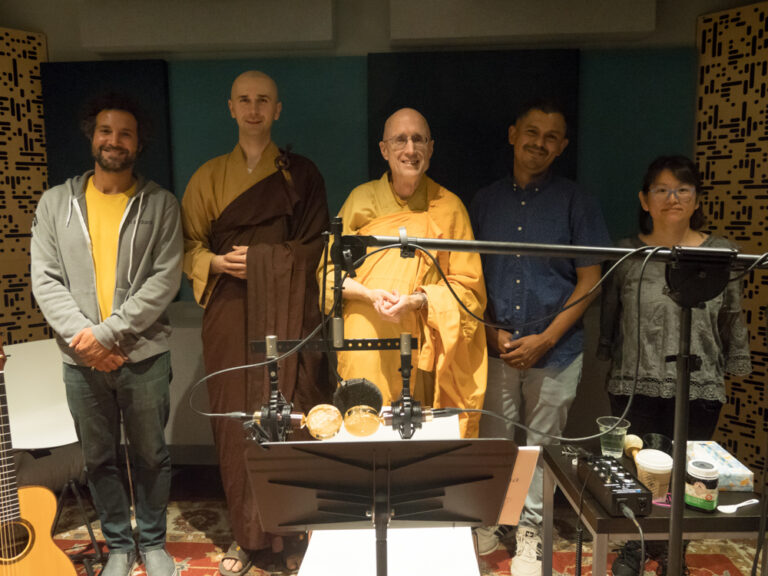
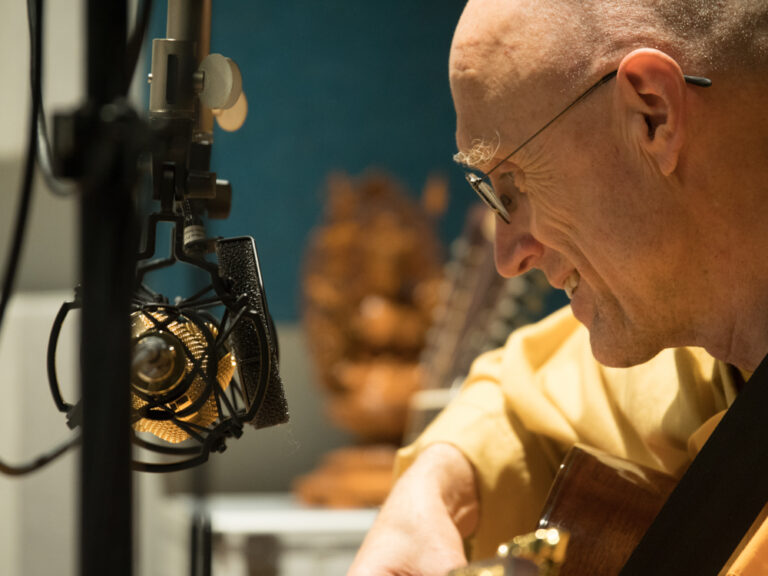
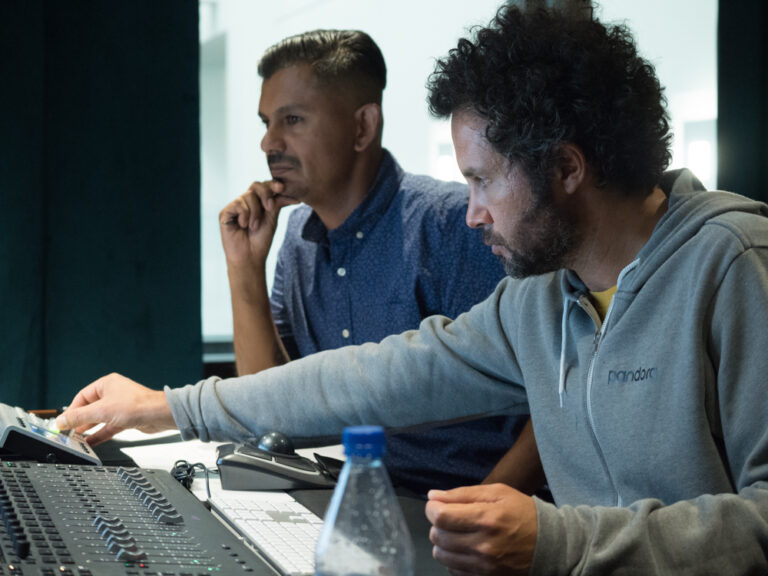
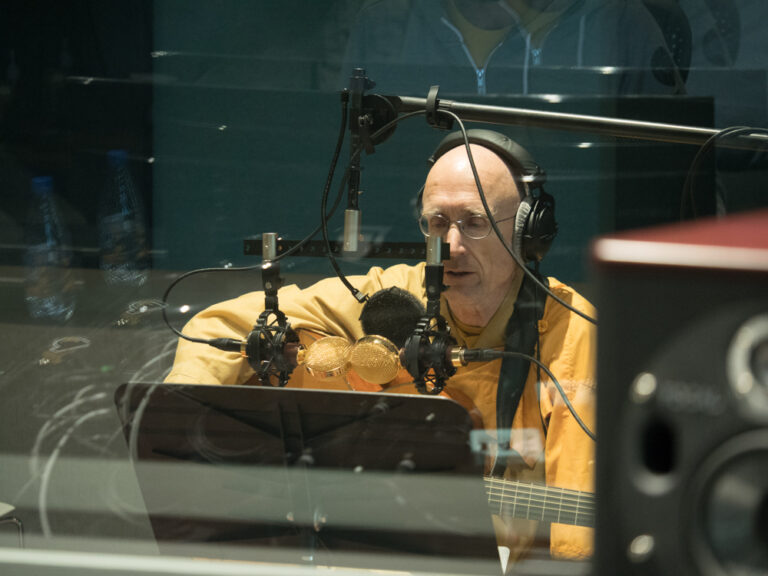
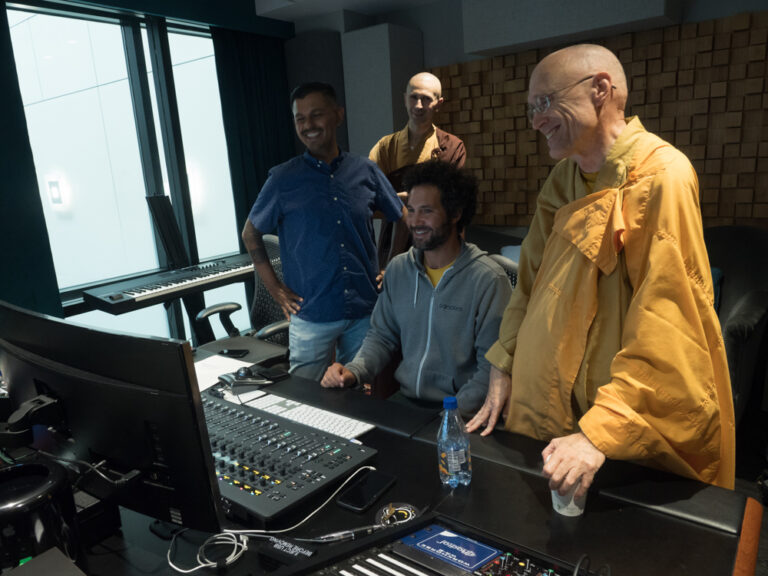
Deep thanks to Homero Espinosa, DJ and composer extraordinaire, who introduced me to David Cuetter, whose sensitive ears and outstanding ribbon mics captured the sounds you will hear.
Fabrizio Alberico (https://www.albericoguitar.com/) brought to musical life both the banjo and the guitar I’m playing; profound gratitude to Fab for his generosity of spirit.
Gratitude to Sandy Chiang, Lai Theng Leong, Irene Nakasone, and Jerry Hsu for making dreams into reality.
Website and social media: Loc Huynh, Meghan Sweet, Xuan Ooi.
And deepest bows to the late Chan Master Hsuan Hua, who encouraged a clueless American monk with these words: “You know, in your culture, you have to use everything you have, every skill, to expediently teach the Dharma. In this country, a monk who plays guitar could be really useful!”
Rev. Heng Sure